


Imagining Iran Unbound
- Neil Gordon
- Jan 15
- 3 min read
The Unthinkable Becomes Possible
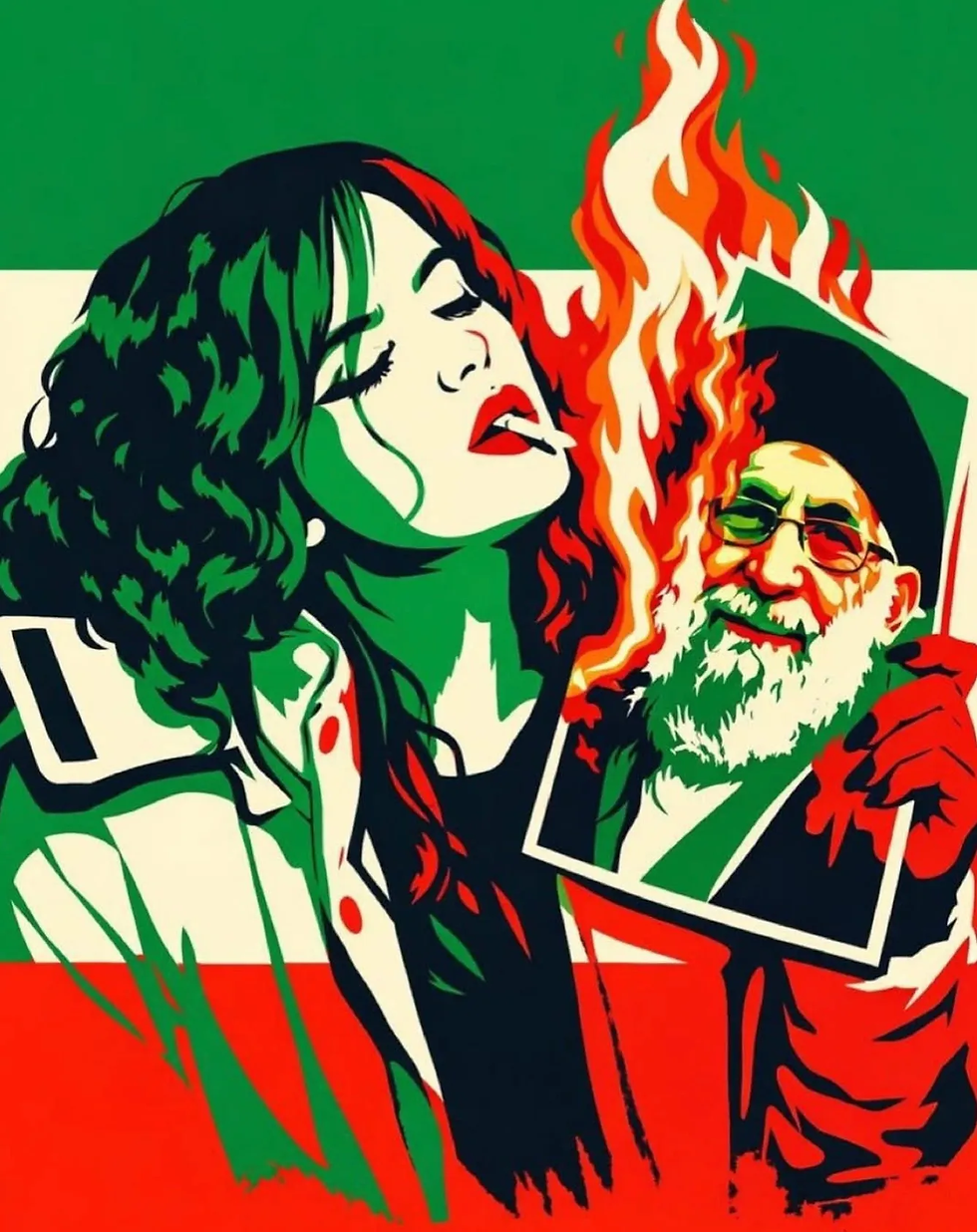
There are moments in history when imagination precedes reality—not as fantasy, but as rehearsal.
To imagine an Iran released from the weight of the Islamic Republic and the strictures of Sharia law is not to deny its past, nor to erase its culture. It is to remember something older, deeper, and more enduring than the regime that currently governs it. Iran is not synonymous with its rulers. It never has been.
What if the chants echoing through Iranian streets—so often silenced, so often punished—were finally answered?
As the new year unfolds, those chants don’t feel theoretical. They feel present—costly, visible, and impossible to fully contain. The question is no longer whether Iran can imagine a different future. The question is whether enough people—inside and outside the country—can endure the price of insisting on it.
What if the long arc of resistance bent toward dignity?
A Civilization Beneath the Regime
Iran is one of the world’s great civilizational anchors—Persian, poetic, scientific, and cosmopolitan, long before the modern West defined itself. Its people have lived under imposed theocracy for decades, but the memory of plurality, curiosity, and self-expression has never disappeared. It has simply gone underground.
A revolution in Iran today would not resemble the revolutions of the twentieth century. It would not be driven by ideology replacing ideology. It would be driven by exhaustion—by women refusing erasure, by youth refusing inheritance of fear, by families refusing a future narrowed to obedience.
This would not be a revolution of slogans alone, but a reopening of the universities, of culture, of trade, of dialogue with the world.
The End of the Proxy Age
Perhaps the most immediate—and globally consequential—shift of a peaceful Iran would be this:
The proxy wars would begin to end—first by starvation of cash and legitimacy, then by the slow unraveling of networks that rely on ideology as fuel.
A post-theocratic Iran would no longer funnel weapons, funding, and training to militant groups across the region. The long shadow network of militias, rockets, and destabilization would wither—not through military defeat, but through irrelevance.
With the ideological engine shut down, the machinery of proxy violence would grind to a halt. Entire conflict zones—kept alive by external sponsorship—would finally be forced toward political resolution rather than perpetual war.
This alone would reduce civilian suffering across the Middle East on a scale difficult to overstate.
A Pro-Western Iran Changes Everything
A post-theocratic, pro-Western Iran would immediately alter the gravitational center of the Middle East.
Not through domination—but through normalization.
Iran’s reintegration into the global community would dissolve one of the region’s most destabilizing fault lines. Extremist movements would lose their primary state sponsor. Regional arms races would lose their justification. Energy, technology, education, and cultural exchange would replace militarization as the dominant currency of influence.
Iran would no longer function as a permanent antagonist in the global system, but rather as a bridge between East and West, Islam and secular governance, and tradition and modernity.
This transformation would ripple outward—into global markets, diplomatic alliances, and long-frozen regional frameworks built around containment rather than cooperation.
The Unthinkable Becomes Possible: Iran and Israel
Perhaps the most profound shift would be the one long considered impossible.
A normalized relationship between Iran and Israel would not be immediate—but it would become conceivable in stages: de-escalation first, then diplomacy, then the kind of practical contact that makes old propaganda feel increasingly obsolete.
The hostility between these two ancient peoples has never been organic. It has been manufactured, maintained, and ritualized by ideology. Remove the ideology, and what remains is history, trade, scholarship, and shared regional destiny.
An Iran no longer committed to Israel’s destruction would collapse the logic of permanent war. The Middle East would, for the first time in generations, glimpse a stability not enforced by fear, but sustained by mutual interest.
Security cooperation would replace existential threat. Innovation would replace militarization. Cultural exchange would replace propaganda.
The ripple effects would extend far beyond the region—reshaping global alliances that have been defined for decades by deterrence rather than trust.
The Risk of Hope
Imagining such a future is dangerous. Authoritarian systems depend on the belief that change is impossible, that suffering is permanent, that resistance is futile. Hope itself becomes a threat.
And yet history moves precisely when imagination outruns fear.
Iran’s people have already begun this work—not with weapons, but with courage. With memory. With refusal.
The question is not whether such a future is guaranteed.
The question is whether the world is prepared to recognize it when it begins.
Because when Iran is finally unbound, it will not only change itself.
It will quiet wars, collapse false enemies, and reorder the Middle East at its roots.
And in doing so, it will change the world.
Let us pray for the people of Iran.


Comments